Tanjun Mold Inspections logo

Unbiased Mold & Air Testing

Indoor Air Quality

Test the air you are breathing. Get science-based air quality data with AIHA-accredited lab analysis. We Only Inspect & Test for Mold — No Remediation


Call (818) 964-1533
5.0
Why We Combine Testing Methods
Your Friendly Test Only Inspector - Tanjun Mold Inspections

Suspect Mold?
Have Musty Odors or Symptoms?

Speak with our Certified, Test-Only Inspector.

Call Your Test-Only Inspector 818-964-1533
Indoor Air Quality Testing

Test Your Air Quality

Why Do Customers Request Air Sampling?

  • Symptoms or Musty Odors?

    Research indicates that some molds can contribute to headaches, fatigue, dizziness, nausea, and upper respiratory or eye irritation. Customers sometimes report that their allergy, flu, or cold-like symptoms improve when away from their home. Smelling something strange — but can't pinpoint the source? — Mold can release MVOCs along with a distinct musty and earthy odor.

  • Recent Water Damage?

    Had a recent plumbing failure, roof leak due to El Niño rains, or window compromise? Even after surface water gets dried, remaining moisture — trapped in flooring, walls, and ceilings — can promote mold growth within 24 - 72 hours.

  • Buying or Selling Property?

    Buying or selling a new home, leasing a premium property, or need to verify mold remediation was successful? Customers often request unbiased lab-based reports — before finalizing real estate transactions.

Tanjun Mold inspections, an Independent, test only company, checking home air quality for mold signs

Did You Know? Mold often starts as a hidden issue — colonizing inside walls, flooring or ceilings — or sporulating into the air — long before it becomes visible.

Call (818) 964-1533 Schedule Your Mold Test

Certified. Friendly Explanations.

Air Testing Solutions

Independent Mold Testing. Air Sampling Solutions Explained.

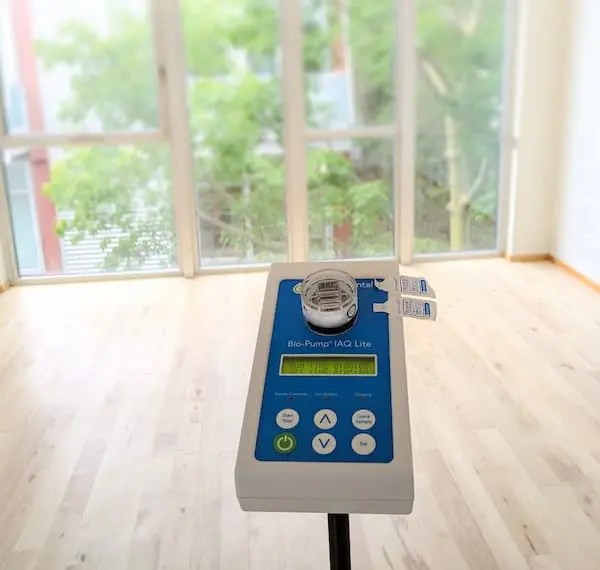
Ambient Air Testing Air sampling performed by Tanjun Mold Inspections

Using specialized spore traps, we can sample the currrent mold levels in your indoor living spaces.

Indoor Air Samples measure the concentration and types of airborne mold spores. The sample represents the “breathing zone” — the air people actually inhale during daily activities.

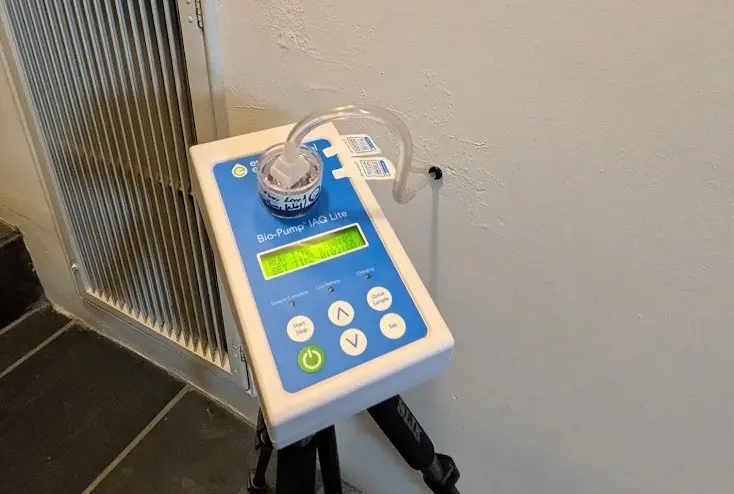
Inner Wall Cavity Testing Inner Wall Cavity Air Testing by Tanjun Mold Inspections

Musty smells, illness or allergies, but no visible mold?

Mold growth may exist inside the walls — even when there are no visible signs of mold yet.

A Wall Cavity Air Sample can be taken by drilling a small hole into the wall and connecting a tube to the spore trap cartridge.

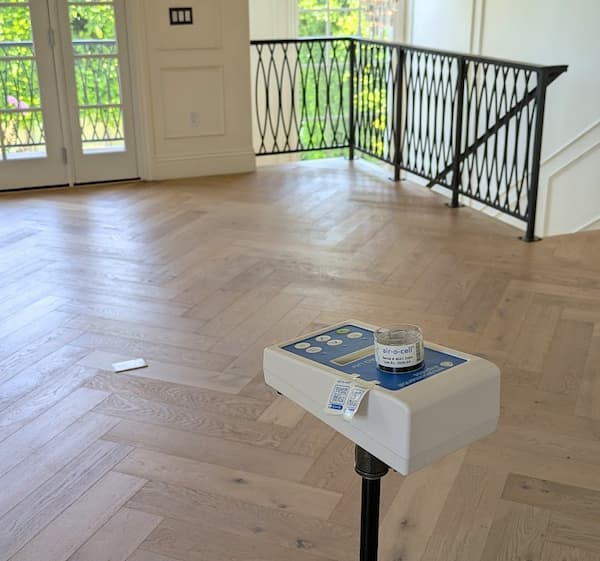
Clearance Testing (PRV) Tanjun Mold Inspections performing air testing for Clearance (PRV) test

Air Sampling is a vital part of Clearance — To ensure remediation was effective, mold spore counts and types are analyzed.

Goal: Verify that the Indoor Air Quality (IAQ) has returned to normal - meaning no elevated mold spore levels. Proper remediation work involves mold removal, cleaning, HEPA vacuuming and filtering.

Science Based. Fungal Ecology.

Lab Analyzed Air — Not Guesswork

Professional lab testing for mold can provide unbiased, science based data to assess your indoor air quality.

Airborne Mold Spores - Tanjun Mold Inspections Analysis

Aren't Mold Spores Everywhere?

Yes. Mold is often found naturally outdoors and as part of normal activites, mold spores can travel into the home.

Indoor vs Outdoor: The real question — Is mold growth occurring inside building materials — versus spores simply traveling indoors from the outside?

Lab Results: The report will list (1) Spore types (e.g., Aspergillus/Penicillium, Cladosporium, Stachybotrys, Chaetomium, etc.) (2) Spore counts (per cubic meter of air) (3) Comparison to an outdoor “control” sample (to see if indoor levels are elevated) (4) Presence of hyphal fragments

A professional laboratory microscope setup for mold analysis

Can Mold Cause Musty Smells Even if it's Not Visible?

Yes. And that's why our customers choose ambient air sampling when they want to assess what they are breathing.

When airborne, mold spores are not visible — they are microscopic, typically ranging from 2 to 100 micrometers in size. Thus, ambient air sampling can help detect the mold types and levels of mold spores found indoors.

Additionally, wall cavity air sampling has helped customers reveal hidden mold growth occurring inside building materials including drywall, insulation and wall cavity framing.

Happy Clients. Successful Inspections.

Customer Feedback

"The opposite of corporate! Genuine, human help when needed most!"

— Monty B., Homeowner Testimonial

Read Customer Reviews

AIHA LAP Accredited Laboratory Logo Badge

Samples are sent to an AIHA (American Industrial Hygiene Association) accredited laboratory that specializes in environmental microbiology.

ENVIRONMENTAL MICROBIOLOGY


Lab Reports

What Kind of Information is Contained in Lab Reports?

They provide very technical and detailed information that we analyze and summarize so that it is more friendly and useful to our customers.

The lab analysis will report on any mold found, the amount and the mold types detected (such as Aspergillus/Penicillium, Stachybotrys, Chaetomium, Ulocladium). We determine whether the sample indicates:

  • NORMAL FUNGAL ECOLOGY An indoor environment that reflects a normal fungal ecology
  • SETTLED SPORES An indoor environment that is contaminated with some settled spores
  • ACTUAL GROWTH An indoor environment that is contaminated with actual mold growth and associated spores
FUNGAL DICTIONARY

What are common mold types found indoors?

Select a mold genus below to review its environmental characteristics and common indoor substrates.

Lab technician holding petri dish with mold growth analysis
Alternaria

Alternaria is one of the most common molds and is abundant worldwide. This genus contains around 40 to 50 different species, only a few of which are commonly found indoors. Alternaria spores are easily dispersed through the air by wind. Alternaria can grow on a variety of substrates indoors when moisture is present.

Cladosporium

Cladosporium is an abundant mold worldwide and is normally one of the most abundant spore types present in both indoor or outdoor air samples. This genus contains around 20 - 30 different species. Cladosporium produces dry spores that are formed in branching chains. Spores are released by twisting of the spore-bearing hyphae as they dry. Thus, the spores are most abundant in dry weather. Cladosporium can be found anywhere indoors, including textiles, bathroom tiles, wood, moist windowsills, and any wet areas in a home. Some species of Cladosporium grow at temperatures near or below 0(C) / 32(F) and can often be found on refrigerated foodstuffs and even frozen meat.

Penicillium / Aspergillus

Penicillium / Aspergillus are two separate genera of molds that are so visually similar that they are commonly discussed together as a group. Together, there are approximately 400 different species of Penicillium / Aspergillus. Penicillium / Aspergillus produce dry spore types that are easily dispersed through the air by wind. These fungi serve as a food source for mites, and therefore can be dispersed by mites and various insects as well. Penicillium / Aspergillus are found throughout the home. They are common in house dust, growing on wallpaper, wallpaper glue, decaying fabrics, wallboard, moist chipboards, and behind paint. They have also been isolated from blue rot in apples, dried foodstuffs, cheeses, fresh herbs, spices, dry cereals, nuts, onions, and oranges.

Chaetomium

Chaetomium is a common mold worldwide. This genus contains around 80 - 90 different species. Chaetomium spores are formed inside fruiting bodies. The spores are released by being forced out through a small opening in the fruiting body. The spores are then dispersed by wind, water drops, or insects. Chaetomium can grow in a variety of areas indoors, but is usually found on cellulosebased or woody materials in the home. It is very common on sheetrock paper that is or has been wet.

Stachybotrys

Stachybotrys is ubiquitous in nature. This genus contains about 15 species. Stachybotrys produces wet slimy spores and is commonly dispersed through water flow, droplets, or insect transport, less commonly through the air. Stachybotrys is common indoors on wet materials containing cellulose such as wallboard, jute, wicker, straw baskets, and other paper materials.

The 3 Vital Methods To Assess Fungal Ecology

Why We Often Combine 3 Methods

Since each inspection method has limitations, relying on just one may miss important details.
Each method answers different mold and water damage questions — Combining all three contributes to a more thorough investigation — both before and after mold remediation.

Method 01

Visual Inspection

Purpose

Checks for visible mold growth, signs of water damage (like stains or bubbling), condensation, and moisture intrusion (such as by windows, sinks, and ceilings)

Limitations

Eyes cannot detect microscopic spores in your air — nor can it see inside walls or under floors. A room can look clean — but have elevated mold spore counts in the air. Surfaces can look dry — but retain high moisture.

See How We Solve This

Combine with Moisture Testing — to detect moisture behind walls or flooring and utilize Air Sampling — to measure invisible airborne spore levels in the breathing zone. Wall Cavity air sampling may be useful if hidden mold growth is suspected behind the walls.

Method 02

Moisture Testing

Purpose

Uses moisture meters to check for high moisture content (MC) such as in walls or flooring. Since mold needs moisture, checking for moisture is key.

Limitations

Moisture meters cannot detect (1) elevated mold spore counts in the air (2) remaining mold from past water damage or (3) if the moisture is trapped deeper into the wall cavity or building materials — even if there is mold growth.

See How We Solve This

Combine with a Visual Inspection — to check if there is visible mold on various building materials. If mold colonization inside walls or flooring causes spores to travel into the ambient air, Air Sampling may be able to detect it. Wall cavity air sampling may be able to detect mold growth behind the walls.

Method 03

Air Sampling

Purpose

Detects (1) mold types and (2) spore counts in the air — helpful for assessing fungal ecology for pre-remediation and essential for post-remediation clearance testing.

Limitations

Although elevated mold spores typically are found close to the growth source, air samples cannot identify the source of the leak. Mold spores may stay inside walls or flooring. Also, heavier and stickier spores may not become easily airborne.

See How We Solve This

Combine with Visual Inspections & Moisture Testing to check for areas at risk for mold growth or to trace elevated spore counts back to the source of the moisture intrusion.

Industry Standard: IICRC S520 Fungal Ecology

Can Visual Checks and Moisture Meters Alone Verify a Condition 1 Status?

No. Since mold spores are not visible when airborne, lab testing is required to assess fungal ecology. Under professional IICRC S520 guidelines, a home's fungal condition falls into three Conditions that eyes and moisture meters alone cannot verify:

Clearance - Post-Remediation Verification (PRV) Passing Clearance means the environment has returned to a Condition 1 status. Practically, this requires performing air sampling inside the containment in order to check the mold types and spore counts detected.
Pre-Remediation Inspections During an inspection where water damage has been experienced, or where there is risk of mold growth, a visual inspection should be combined with moisture content testing and where appropriate, air or surface sampling should be performed to assess the fungal ecology.
● Condition 1 — Normal Fungal Ecology An indoor environment that reflects a normal fungal ecology.
● Condition 2 — Settled Spores An indoor environment that is contaminated with some settled spores.
● Condition 3 — Actual Growth An indoor environment that is contaminated with actual mold growth and associated spores.

Mold Sampling Guide

What Type Of Mold Test Is Recommended?

Indoor Air Sample

Identifies Indoor Mold Types (Genera) and Spore Counts against Outdoor Levels.

No Visible Mold
  • Musty Odors or Symptoms
  • PreSale Real Estate Inspections
  • High Moisture Readings
  • Insurance Documentation
  • Post Remediation Clearance

Surface

Analyze swab or tape samples to determine if mold growth exists and if so, the mold type or genus and amount.

Visible or Suspected Mold
  • Need Confirmation and Identification via Lab Analysis
  • Post Water Damage Insurance Documentation
  • Post Remediation Clearance

Bulk

Determine extent and type of mold growth by directly examining physical building materials.

Visible or Suspected Mold
  • Need lab analysis of building material such as drywall, insulation or carpeting

Wall Cavity

Checks to see if there may be hidden mold growth inside the walls or ceiling.

No Visible Mold
  • High Moisture Readings
  • Musty Odors or Symptoms
  • Presale Real Estate Inspections
  • Post Water Damage Insurance Documentation

Our Credentials


MICRO Certified Mold Inspector CMI # 86294

InterNACHI (International Association of Certified Home Inspectors) Certified Mold Inspector

Member # NACHI25081826  |  Certificate # 1755634505

IAC2 Certified, IAC2 Mold Certified (International Association of Certified Indoor Air Consultants)

Certification ID: IAC2-95070

Friendly Communications. Lab Backed Data.

Our Process

Tanjun Mold Inspections performing- Professional Performing Visual Inspections

Visual Inspections

We start with performing a visual inspection of the property, focusing on areas where there may be water damage, moisture issues or suspected mold growth.

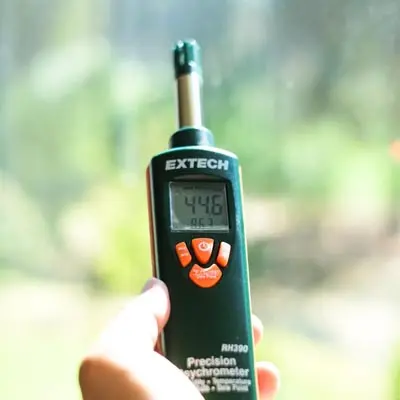
Tanjun Mold Inspections - Advanced Tools for Taking Environmental Measurements

Environment Readings

With the help of specialized tools we may take environmental readings such as Moisture Content (MC) or humidity levels in order to identify any potential issues.

Tanjun Mold Inspections - Lab Analysis for Mold Samples

Lab Testing & Analysis

Surface and Air samples may be recommended depending on the inspection findings or customer concerns. Such samples are sent to an AIHA Accredited Lab that specializes in identifying and analyzing mold.

Tanjun Mold Inspections Providing a Comprehensive Findings and Recommendations Report

Findings & Recommendations

Once all of the data is collected, we provide a report of our findings. If a mold growth problem is identified, a Remediation Protocol is outlined.

Dig Deeper • Educational Guides

Tanjun Knowledge Library

Plain-language guides on mold science, indoor air quality (IAQ), hidden moisture signs, and the test-only process.

Explore All Articles →

CONTACT US

Our Process - Advanced Tools for Taking Environmental Measurements

Book Your Test Only Inspection

Let Us Know Your Situation!

PHONE Call (818) 964-1533

EMAIL tanjunmold@gmail.com

SERVICE AREAS

Los Angeles County, CA

Ventura County, CA


TEST ONLY Test-Only Advantage

Contact Information

Property Address

Services Requested

FAQ

Mold Frequently Asked Questions