Tanjun Mold Inspections logo

Northridge, CA 91324, 91325 & 91330 • San Fernando Valley

Mold Inspection in Northridge, CA

Independent, certified professional mold inspectors serving the Northridge, CA 91324, 91325, and 91330 communities. Test-only — we never sell remediation to ensure unbiased recommendations.


Call (818) 964-1533 Schedule Inspection
5.0
Your Friendly Test Only Inspector - Tanjun Mold Inspections

Northridge Mold Inspection & Testing Professionals

Check your Northridge (91324, 91325 & 91330) home for mold, moisture, and air quality issues. Schedule your Test-Only inspection.

Call Your Test-Only Inspector (818) 964-1533

Local Housing & Environmental Insights • 91324, 91325 & 91330

Northridge Housing & Mold Risk Factors

1950s–80s Ranch Homes, Alluvial Soil & 1994 Earthquake Legacy

Northridge is defined by its wide suburban streets and classic 1950s–1980s ranch-style and raised-foundation architecture across the 91324, 91325, and 91330 zip codes. Unlike the rocky foothills to the north, Northridge sits on a thick layer of alluvial valley soil that expands and contracts with seasonal moisture, placing ongoing stress on older concrete slabs and original clay sewer lines.

As the historic epicenter of the 1994 Northridge earthquake, many properties still carry subtle seismic-related vulnerabilities. Even in homes that were structurally repaired, hairline foundation fissures, shifted roof saddles, or micro-separations around window flashings and chimney joins can allow wind-driven winter rain to penetrate wall cavities and attics.

Roof Leaks Following Rainstorms Small or large defects in roofing underlayment or flashing often lead to moisture intrusion following winter rain events, especially as roofs age.
Hydrostatic Pressure on Flat Lots Slower soil percolation on flat Northridge lots can cause stormwater to pool against foundations and wick upward through porous concrete.
Aging HVAC & Humidity Control Older or oversized air conditioning units can struggle to dehumidify indoor air during humid summer days, contributing to coil and duct condensation.
Slab-Level Plumbing Failures Original 1960s-era copper piping encased in concrete is prone to pinhole corrosion, leading to hidden slab leaks beneath flooring.
Compromised Roof Underlayment Even when concrete or clay roof tiles appear intact, 30- to 40-year-old felt underlayment beneath them can become brittle and fail during heavy downpours.
Crawl Space Dampness Many raised-foundation homes lack modern ground-cover vapor barriers, allowing soil moisture to evaporate upward toward wooden subflooring.
Slab & Sub-Floor Microbial Growth Moisture vapor migrating through older concrete slabs frequently damages laminate and hardwood flooring, leading to earthy odors and mold.
Attic Ghosting & Surface Mold Inadequate ridge and soffit venting in original ranch homes traps indoor humidity, causing fungal spotting on rafters and roof sheathing.
Window Perimeter Intrusion Cracked stucco and aged caulking — often dating back to seismic settling — allow winter rain to dampen structural headers above windows.
Kitchen & Bathroom Wall Voids Slow leaks from original galvanized plumbing, shower pans, and worn grout lines often feed hidden moisture inside wall cavities.
Crawl Space Efflorescence & Dampness White, powdery mineral deposits along foundation stem walls indicate ongoing moisture migration from surrounding perimeter soil.

Schedule a professional inspection to identify potential mold risks in your Northridge home.

Your Friendly Technical Interpreter. Test-Only

Mold Inspection & Testing Services in Northridge

Home Mold Inspections

Mold Inspections

Visual inspections that may include moisture content readings, humidity measurements, and checking common areas where moisture intrusion is often a risk. Includes a detailed written report with findings and recommendations.

Learn More →
Air & Surface Lab Testing

Lab Testing

Our professional mold samples are analyzed by an AIHA-accredited laboratory, with standard results typically available within 2 business days. Rush processing, including next-business-day reporting, is available for an additional fee.

Learn More →
Indoor Air Quality Testing

Indoor Air Quality Testing

Evaluate airborne mold spores, species detected, and ambient air quality. When appropriate, wall cavity air sampling may also be performed.

Learn More →
Post-Remediation Clearance

Post Remediation Clearance Testing

PRV (Post Remediation Verification) or Clearance Testing services involve independent verification and testing to ensure mold remediation was successfully completed.

Learn More →
Real Estate Mold Inspections

Pre-Sale Home Inspections

A vital aspect for performing due diligence during real estate transactions, Tanjun Mold Inspections offers pre-purchase and pre-sale inspections for buyers, sellers, and agents in Northridge and nearby communities.

Learn More →
Water Damage & Moisture

Water Damage Assessments

Promptly identify hidden moisture and potential mold growth after leaks, floods, or plumbing failures to minimize damage.

Learn More →

Residential Inspection & Testing - Starting Prices

Prompt turnaround times, detailed reports, and friendly, easy-to-understand explanations.

Schedule Inspection

Standard Home Mold Inspection

$350+

Base fee starting at $350 for homes up to 1,500 sq. ft.

AIHA Lab Testing Samples

$95

Per air or surface sample analyzed by an AIHA-accredited lab.

Indoor Air Quality (IAQ) Only

$440+

Starting at $440 for targeted air quality only visit & lab report.

Post Remediation Clearance

$550+

Starting at $550 for independent PRV visual, moisture & air testing.

Schedule Appointment

Schedule Your Northridge Mold Inspection

If you’re buying a home, noticing a musty odor, or dealing with past water damage, a professional mold inspection can help you make informed decisions.

Professional mold inspections and Indoor Air Quality Testing in Northridge, CA can help you identify potential risks early on to maintain a healthy indoor environment — with accurate, reliable results you can trust.

Tanjun Mold Inspections logo

EDUCATOR. NEIGHBOR. SPECIALIST.

Why Customers Choose
Tanjun Mold Inspections

Educator

Your Friendly Tech Interpreter

Your Friendly Test Only Inspector - Tanjun Mold Inspections

"Takes Time to Teach..."

We take time — to provide a friendly and understandable explanation of the inspection findings and the technical details of the report to customers — who are not lab techs.

Neighbor

Your Local Small Business

Your Friendly Small Business - Tanjun Mold Inspections

"Opposite of Corporate..."

Since we're not a chain or franchise — we are not under pressure to meet corporate sales quotas. Instead, we invest in the time and personal attention needed for each unique job.

Specialist

Your Certified Lab Service

Your Certified Lab Service - Tanjun Mold Inspections

AIHA Certified

All air and surface samples are logged and processed utilizing trusted, independent AIHA-accredited laboratories with secure chain-of-custody protocols. Reliable data — means informed decisions.

AIHA LAP Accredited Laboratory Logo Badge

Samples are sent to an AIHA (American Industrial Hygiene Association) accredited laboratory that specializes in environmental microbiology.

ENVIRONMENTAL MICROBIOLOGY


Lab Reports

What Kind of Information is Contained in Lab Reports?

They provide very technical and detailed information that we analyze and summarize so that it is more friendly and useful to our customers.

The lab analysis will report on any mold found, the amount and the mold types detected (such as Aspergillus/Penicillium, Stachybotrys, Chaetomium, Ulocladium). We determine whether the sample indicates:

  • NORMAL FUNGAL ECOLOGY An indoor environment that reflects a normal fungal ecology
  • SETTLED SPORES An indoor environment that is contaminated with some settled spores
  • ACTUAL GROWTH An indoor environment that is contaminated with actual mold growth and associated spores
FUNGAL DICTIONARY

What are common mold types found indoors?

Select a mold genus below to review its environmental characteristics and common indoor substrates.

Lab technician holding petri dish with mold growth analysis
Alternaria

Alternaria is one of the most common molds and is abundant worldwide. This genus contains around 40 to 50 different species, only a few of which are commonly found indoors. Alternaria spores are easily dispersed through the air by wind. Alternaria can grow on a variety of substrates indoors when moisture is present.

Cladosporium

Cladosporium is an abundant mold worldwide and is normally one of the most abundant spore types present in both indoor or outdoor air samples. This genus contains around 20 - 30 different species. Cladosporium produces dry spores that are formed in branching chains. Spores are released by twisting of the spore-bearing hyphae as they dry. Thus, the spores are most abundant in dry weather. Cladosporium can be found anywhere indoors, including textiles, bathroom tiles, wood, moist windowsills, and any wet areas in a home. Some species of Cladosporium grow at temperatures near or below 0(C) / 32(F) and can often be found on refrigerated foodstuffs and even frozen meat.

Penicillium / Aspergillus

Penicillium / Aspergillus are two separate genera of molds that are so visually similar that they are commonly discussed together as a group. Together, there are approximately 400 different species of Penicillium / Aspergillus. Penicillium / Aspergillus produce dry spore types that are easily dispersed through the air by wind. These fungi serve as a food source for mites, and therefore can be dispersed by mites and various insects as well. Penicillium / Aspergillus are found throughout the home. They are common in house dust, growing on wallpaper, wallpaper glue, decaying fabrics, wallboard, moist chipboards, and behind paint. They have also been isolated from blue rot in apples, dried foodstuffs, cheeses, fresh herbs, spices, dry cereals, nuts, onions, and oranges.

Chaetomium

Chaetomium is a common mold worldwide. This genus contains around 80 - 90 different species. Chaetomium spores are formed inside fruiting bodies. The spores are released by being forced out through a small opening in the fruiting body. The spores are then dispersed by wind, water drops, or insects. Chaetomium can grow in a variety of areas indoors, but is usually found on cellulosebased or woody materials in the home. It is very common on sheetrock paper that is or has been wet.

Stachybotrys

Stachybotrys is ubiquitous in nature. This genus contains about 15 species. Stachybotrys produces wet slimy spores and is commonly dispersed through water flow, droplets, or insect transport, less commonly through the air. Stachybotrys is common indoors on wet materials containing cellulose such as wallboard, jute, wicker, straw baskets, and other paper materials.

Northridge, CA 91324, 91325 & 91330 • Local Mold Insights

Northridge Mold Inspection FAQ

What are common causes of mold in Northridge homes?

In Northridge, mold growth is often linked to moisture intrusion from aging roof underlayments, pinhole leaks in older copper or galvanized plumbing, legacy seismic settlement cracks, and restricted ventilation or perimeter drainage in 1950s–1980s homes.

How can I prevent mold in my Northridge home?

Routine maintenance — such as inspecting roof flashings and underlayment after winter storms, keeping gutters and yard drains clear on flat lots, ensuring balanced attic and crawl space ventilation, and addressing slow plumbing leaks early — helps prevent mold in Northridge homes.

What should I do if I find suspected mold in my Northridge home?

Schedule an independent test-only mold inspection. A certified inspector will locate hidden moisture sources using moisture meters and thermal imaging, collect AIHA-accredited lab samples when warranted, and provide an unbiased written findings and remediation protocol report.

How much does a mold inspection cost in Northridge?

A standard home mold inspection in Northridge starts at $350 for homes up to 1,500 square feet. AIHA-accredited lab samples are $95 per sample, Indoor Air Quality testing only starts at $440, and Post Remediation Clearance Testing starts at $550.

FAQ

Mold Frequently Asked Questions

Our Credentials


MICRO Certified Mold Inspector CMI # 86294

InterNACHI (International Association of Certified Home Inspectors) Certified Mold Inspector

Member # NACHI25081826  |  Certificate # 1755634505

IAC2 Certified, IAC2 Mold Certified (International Association of Certified Indoor Air Consultants)

Certification ID: IAC2-95070

Friendly Communications. Lab Backed Data.

Our Process

Tanjun Mold Inspections performing- Professional Performing Visual Inspections

Visual Inspections

We start with performing a visual inspection of the property, focusing on areas where there may be water damage, moisture issues or suspected mold growth.

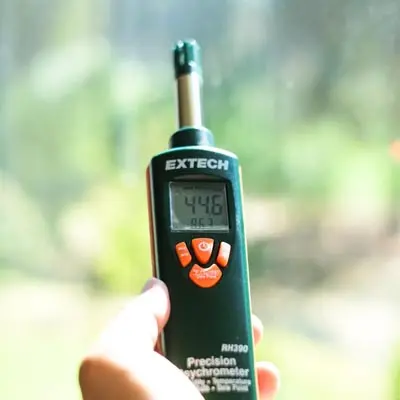
Tanjun Mold Inspections - Advanced Tools for Taking Environmental Measurements

Environment Readings

With the help of specialized tools we may take environmental readings such as Moisture Content (MC) or humidity levels in order to identify any potential issues.

Tanjun Mold Inspections - Lab Analysis for Mold Samples

Lab Testing & Analysis

Surface and Air samples may be recommended depending on the inspection findings or customer concerns. Such samples are sent to an AIHA Accredited Lab that specializes in identifying and analyzing mold.

Tanjun Mold Inspections Providing a Comprehensive Findings and Recommendations Report

Findings & Recommendations

Once all of the data is collected, we provide a report of our findings. If a mold growth problem is identified, a Remediation Protocol is outlined.

CONTACT US

Our Process - Advanced Tools for Taking Environmental Measurements

Book Your Test Only Inspection

Let Us Know Your Situation!

PHONE Call (818) 964-1533

EMAIL tanjunmold@gmail.com

SERVICE AREAS

Los Angeles County, CA

Ventura County, CA


TEST ONLY Test-Only Advantage

Contact Information

Property Address

Services Requested